
Central Africa's rainforest wilderness is the back-to-nature safari destination we're dreaming of
- Jan 6
- 9 min read
An isolated wilderness with a pristine culture, complex Gabon is central Africa beyond compare


By Sarah Marshall
Beyond the forest floor, somewhere between land and sky, there are unseen realms where words lose meaning. Beating long cylindrical drums, a group of male musicians huddled in a circle, pummelled by unrelenting equatorial sun. Smoke billowed from mupetu torches, burning resin from the sacred Okoumé tree, as entranced dancers daubed their skin with white ash. For hours, the Mikumu village had been preparing to summon the Marumba spirit, an animistic figure with the power to terrify and protect. Invoking fear, respect and fascination, masquerade dances hold deep significance for the community. “We call him when somebody dies or when there’s a celebration,” I was told by Guillermo Casasnovas, the fixer who had arranged our visit. “Although sometimes he appears and we don’t know why.”

Furious chanting followed by a sharp inhalation of breath announced Marumba’s arrival. Swaddled in thick ruffles of raffia topped with a crown of feathers and a wooden mask in red, white and black, the garish character crawled into view across a corrugated iron roof. Running at me, I would later learn, was the spirit’s perverse form of benediction. Dancers brandishing palm leaves backflipped and cartwheeled, pushing the mobile haystack into various corners until he gave one final frenzied shimmy and disappeared in a cloud of ash and smoke.
The ritual I’d witnessed belongs to Bwiti, a spiritual discipline rooted in Gabon’s dense, impenetrable forests. A commune on the edge of capital city Libreville, Mikumu offers an education centre, traditional healing clinic and social service for young people. At its core is a determination to preserve a precious connection between culture and the natural world.
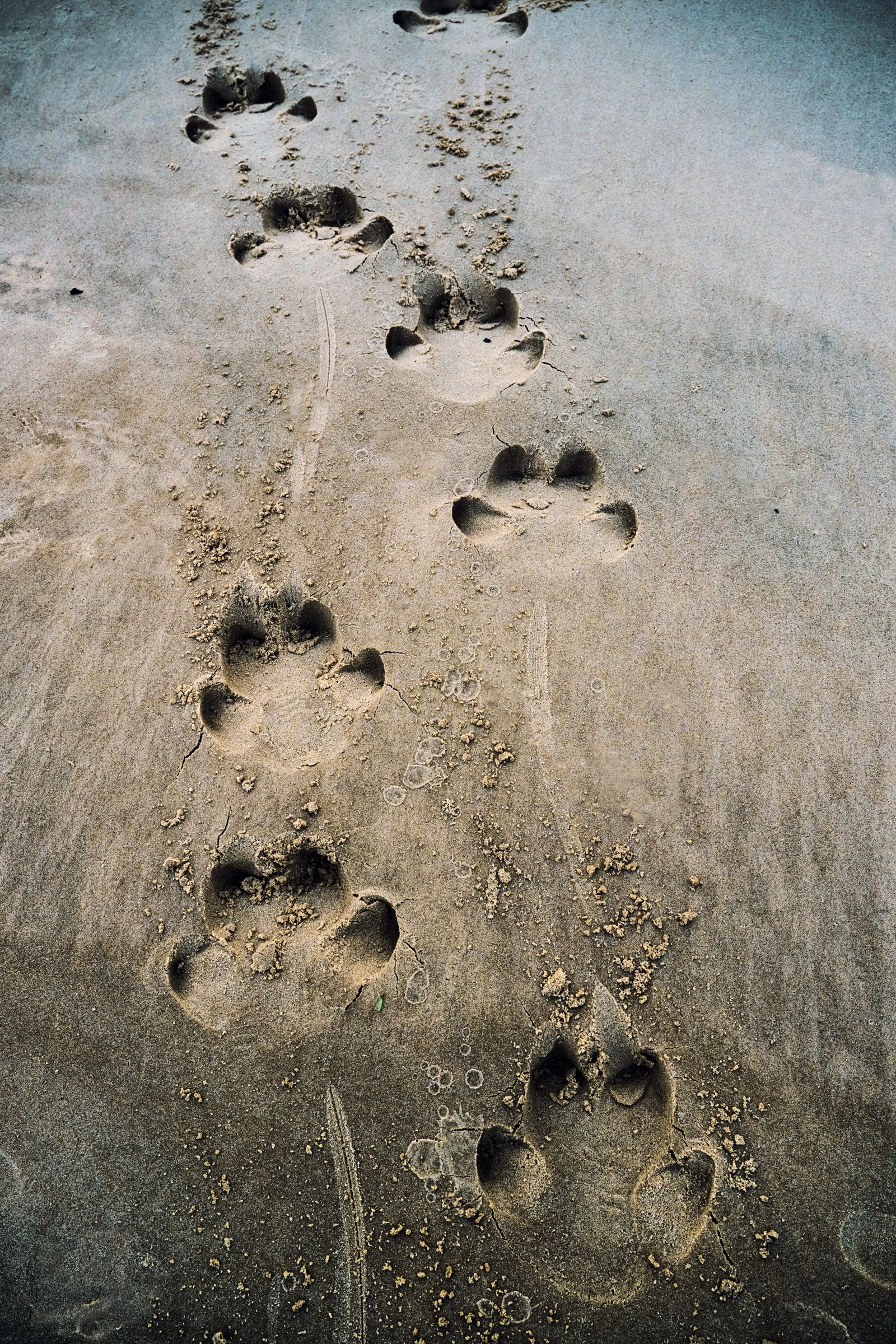

Hippo tracks in the sand. Photo: Alistair Taylor-Young | Coral washed up on the beach. Photo: Alistair Taylor-Young
About 88 per cent of this Central African country the size of Colorado is covered in tropical rainforest, with fewer than 2.5 million people. Beyond a scattering of urban areas, there are no roads or major towns. Largely isolated, several species have developed surprising characteristics: cave-dwelling crocodiles glow orange, mandrills gather in hundreds to form super-troops and hippos surf waves. Secrets are kept, mysteries remain unravelled. So much is frustratingly unknown. This segment of Middle Africa feels closer to Middle-earth.
I first visited Gabon in 2023, when benign dictator Ali Bongo was still in power. The playboy prince, who had inherited his father’s 42-year reign, was ousted in a military coup several months later. For all his faults, Bongo was undeniably a conservationist who set his country on an environmentally progressive path. With a scheme overseen by British-born former environment minister Lee White, the government sought to end a decades-long dependency on oil by embracing carbon credits. Brokered by nonprofit The Nature Conservancy, a “debt-for-nature” swap refinanced national debt to free up funds for marine conservation, further cementing Gabon’s moniker “Africa’s Last Eden”.
Driving into Libreville, a city dogged with inequality, I passed the mansion where Bongo was under house arrest; a tank was still parked outside. As overthrows go, the switch in regimes was tame. New leader Brice Oligui Nguema, who recently won the first post-coup presidential election, is Bongo’s cousin, leading cynics to conclude that little has changed. Libreville is still subject to power cuts – ironic for a country that built its fortunes on fossil fuels.
None of my trips to Gabon have run smoothly. Countless operators praise it as Africa’s last true wilderness, but high costs, poor infrastructure and slippery politics mean few invest in long-term projects, or have ever cracked its Holy Grail of nature.
One of the more favourable legacies of Bongo’s regime is a robust national parks system protecting nearly seven-and-a-half million acres of land. Its creation, in 2002, was largely prompted by a 2,000-mile, 456-day expedition called Megatransect, led by American naturalist Dr Mike Fay. A member of the Wildlife Conservation Society, the largest international NGO working in the country, Fay was concerned about the rampant encroachment of logging industries and the loss of biodiversity. It was a wake-up call to Bongo and the world.

Of all 13 parks, Loango is the jewel. Snaking along the Atlantic coastline more than 150 miles south of Libreville, rainforest converges with the ocean. It’s an unusual mosaic of diverse intact ecosystems: buffaloes graze in open savanna grasslands; lowland gorillas move through a tangle of mangroves; leatherback turtles nest in golden sands; and elephants roam between forest and beach. Reached by road from Port-Gentil, a 35-minute flight from Libreville – and serviced by some of the country’s few comfortable lodges – it’s one of the easier areas to access.
Ndola Camp – operated and owned by Luxury Green Resorts, a subsidiary of the state-owned Gabonese Strategic Investment Fund – sits on the edge of a lagoon at the northern end of the park. Raised on a wooden platform, my en suite tent had none of the frills and flourishes commonplace in East African lodges. But hot water, an air conditioning unit and ice clinking in a gin and tonic are in limited supply across Gabon.
Access to an English-speaking guide is another rarity. A hangover from colonial rule, French is the main language here, alongside about 40 native tongues. Until I was introduced to guide Ulrich Bora Moussouami, nicknamed Borince, I had been communicating with gestures and a smile.

Jumping into a game vehicle, we drove through the savanna searching for forest buffaloes – lighter in colour and prettier than their brutish Big Five counterparts in the East. Cadging a ride, pristine white cattle egrets hopped between the herd’s chestnut-brown backs, fluttering like handkerchiefs in surrender when the animals eventually knocked them off.
As the sun powered down, we parked in the dunes and set off on foot along the coast. Roaring waves rolled in, and between each ebb and flow, translucent ghost crabs scuttled across glassy shores, though within seconds any evidence of their existence was sucked away. Washed-up fronds of brittle branch corals baked in the sunshine, alongside scallop shells flawless enough to cradle Botticelli’s Venus. Not everything spat out by the sea was a masterpiece. Plastic flip-flops, bottle-tops and discarded food cartons formed a dystopian tideline of petrochemical waste carried by currents from neighbouring Angola and the Democratic Republic of the Congo. Sticky puddles of thick black liquid stained the landscape, pollution from industrial oil rigs burning like toxic torches along the horizon.
“In the past, our rangers would have cleaned this up,” sighed Borince, who has been working in the forest for many years. “But since the new government came into power, they haven’t been properly paid. Now everyone sits in the office.” No Eden is the paradise it seems. Sidestepping the human-made debris, forest elephants still visit the beach. Smaller than savanna elephants, with pale milky eyes and straight, slender spear-like tusks, they venture beyond the treeline every evening in search of salty vegetation.

There are an estimated 95,000 forest elephants in Gabon – about 65 per cent of the global population – making it the last stronghold of this endangered species. Previously decimated by poaching activity, currently their biggest threat is human-wildlife conflict. “They destroy our crops and people retaliate,” whispered Borince, as we tiptoed downwind from a matriarch and her clan.
To mitigate the problem, NGO Space for Giants worked with the previous political regime to establish a network of mobile electric fences for communities to protect their farms. The project was heralded as a success, but the government’s failure to equally invest in social issues such as surging unemployment – estimated to be about 20 per cent – were criticised. There was a perception that Bongo prioritised animals above people.

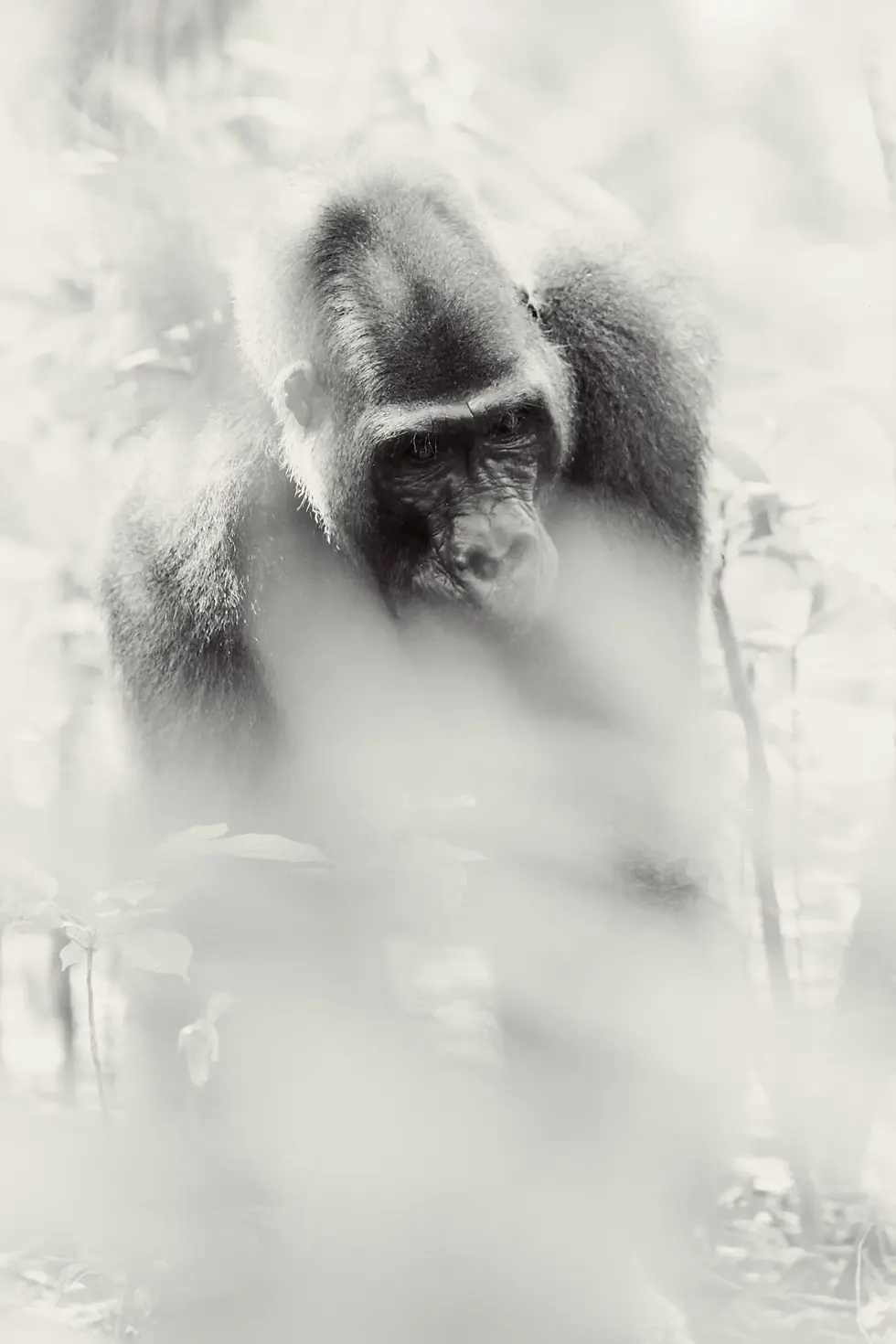
Less of a threat to communities are western lowland gorillas. Researchers estimate there could be up to 360,000 individuals spread across the Congo Basin – more than 300 times the number of their mountain-dwelling cousins. On game drives, we searched and listened for troops, but in a dense forest, the likelihood of spotting wild gorillas is low. One family in Loango, however, has been habituated to be studied. Setting off early, we took a short boat ride to Yatouga, a research centre within the park’s swamps and mangroves. “Habituating gorillas is much harder here,” explained Gabrielle Cottam, who used to work for the Max Planck Institute, which has managed the project since its inception in 2005. Terrain is a challenge. For several months the gorillas graze on grasses in swamplands and bais: mineral-rich, canopy clearings found throughout the larger Congo Basin. Finding the right silverback, said Cottam, took four years followed by a further seven of painstaking tracking using elephant trails. The first tourist interactions took place in 2016.
Fortunately for us, February was peak fig-fruiting season, meaning that the 17-strong troop were close to the research camp. Trackers Samuel Mikodi and Judex Kombe have a sixth sense for navigating the forest. Within half an hour we had located silverback Kamaya and his family, including a baby – a rarity as, on average, there are births only every four to five years. Our group of four tourists – the maximum permitted to join the once-daily treks – crouched behind spindly trunks and a haze of chartreuse leaves.
Embraced by the buttress roots of a kapok tree, a weary female nurtured her youngster who clung to her with a superglue grip. Adolescents lazed in the canopy, limbs dangling like laundry on a washing line. Shining in their eyes was a familiarity that drew us closer than the regulation 23 feet between us; 10 million years of evolution evaporated in one gaze.

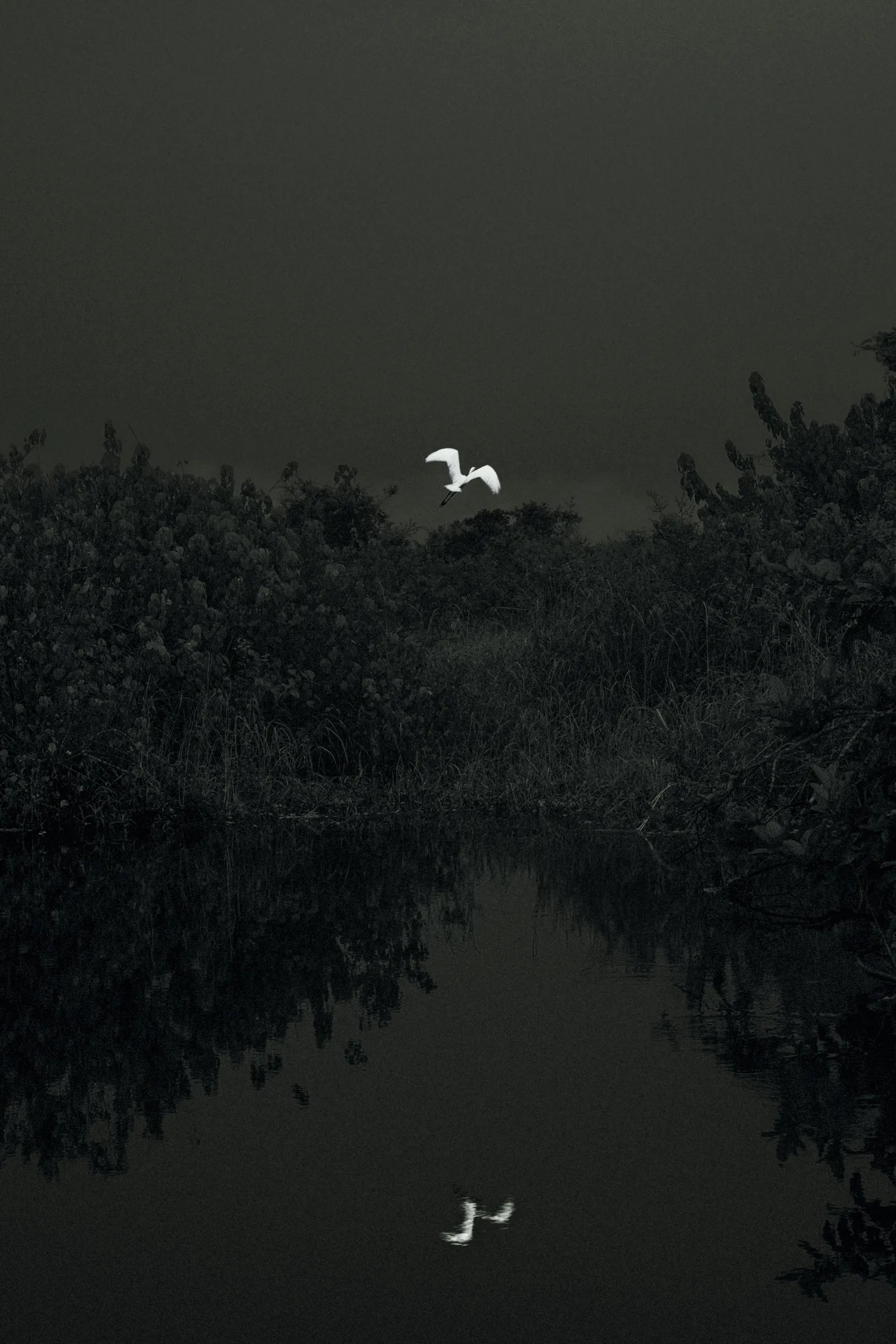
Local girl from Mikumu village. Photo: Alistair Taylor-Young | Great egret flying over the Akaka river.
Photo: Alistair Taylor-Young
Lowland gorillas, chimpanzees and nine other primate species live in Loango, often covering big distances. Crossing the park is much harder for humans. Dangerous coastal currents and the absence of roads make walking the only option, apart from a helicopter ride. Huddled in ponchos on an open boat, we sped for an hour along channels thick with walls of papyrus, guided by hamerkops, kingfishers and white egrets appearing like angels in a stormy sky.
“We need to protect the forest; it’s our roots. Without it, we are lost,” mused Clark Issogui, an articulate, socially conscious 20-something from a local village who divides his time between cheffing in a lodge, composing music and penning rhymes. Wearing a sunshine-yellow bandana and scarlet knee-length socks, he was a bright spark, speaking fluent English peppered with slang learned from hip-hop videos. Issogui led me on a 12-mile trek to the park’s southern reaches. Walking paths created by logging companies, we passed the remains of a Land Rover carburettor and a polished elephant skull. Seed pods the size of paddles crunched underfoot, velveteen mushrooms sprouted from rotting logs and soil-stained streams bled red.

Life starts and ends in the forest, with stories, legends and dances celebrated in between. As I became dazed by sweat, thirst and exhaustion, my imagination kicked into action. Shapes and shadows took on new forms and a stack of twisted liana vines morphed into the Marumba spirit I’d encountered days before.
More mystical was the silence. Aside from the occasional whooshing of a black-casqued hornbill’s voluminous wings, little interrupted the hum of my breathing. Every now and then the rumble of waves signalled the ocean was close.
Sette Cama, outside the park boundary near the Ndogo estuary, is one of the longest-running lodges in Gabon. Originally a hunting concession, the land is leased to South African company African Waters and operates primarily as a fishing camp. Committed to the conservation of environment and community, the team organises beach clean-ups and ensures fishing licences and park fees fund conservation projects.

I arrived to find tables strewn with rods and tackle. Scores on a board totted up captured tarpon, one of the area’s prize catch-and-release fish. Strict regulations and marine protection zones have allowed numerous species to thrive, including bull sharks.
This is the place to observe Gabon’s famous surfing hippos. At 4am I set off in the dark with a torch for a two-hour walk to find the spot where hippos have learned to drift on ocean currents as a means of transport between grazing pastures and a lagoon. Accompanied by guides I ran into a group of red river hogs snuffling in a clearing and had a stand-off on the beach with a belligerent buffalo. Sitting on a log, we waited for the hippos, but they never came. The reality of authentic wildlife viewing is that animals rarely turn up on cue.

Much closer to camp, Ndogo Lagoon, with its 350 or so islands, is the size of Kenya’s safari giant Masai Mara, and harbours more species. One of Africa’s largest populations of manatees hides in water thick with algae, and rare creatures such as the giant pangolin roam undisturbed. Most of these elusive inhabitants are hard to spot, but a sunset boat ride allowed me to witness the spectacle of several thousand African grey parrots coming to roost.
The first few trilled and whistled, fine-tuning their instruments like an orchestra warming up. As light fell, their music grew louder until the lagoon was drowned in their symphony. In that moment, surrounded by a treeline that never ended, I found the Gabon I had hoped for: a place of intangible spirits, unidentified species and untold stories.

Gabon will likely remain a land of untapped potential for some time. Undeniably complicated and frustrating, it’s a precious discovery for those who appreciate what it means to be wild. Wilderness is an overused term, but it has meaning here.
Read the original article on Condé Nast Traveler.
Comments